Nuclear Fusion in Space: Scientists Explore New Energy Frontiers
Researchers propose placing fusion reactors in orbit to power future space missions, potentially revolutionizing deep space exploration.
 💡Tech
Photo: RBC-Ukraine
Key points
- Deploying tokamaks in geostationary orbit
- Advantages of microgravity for fusion reactors
- Alternative to solar power for deep space missions
An Energy Future Beyond Earth
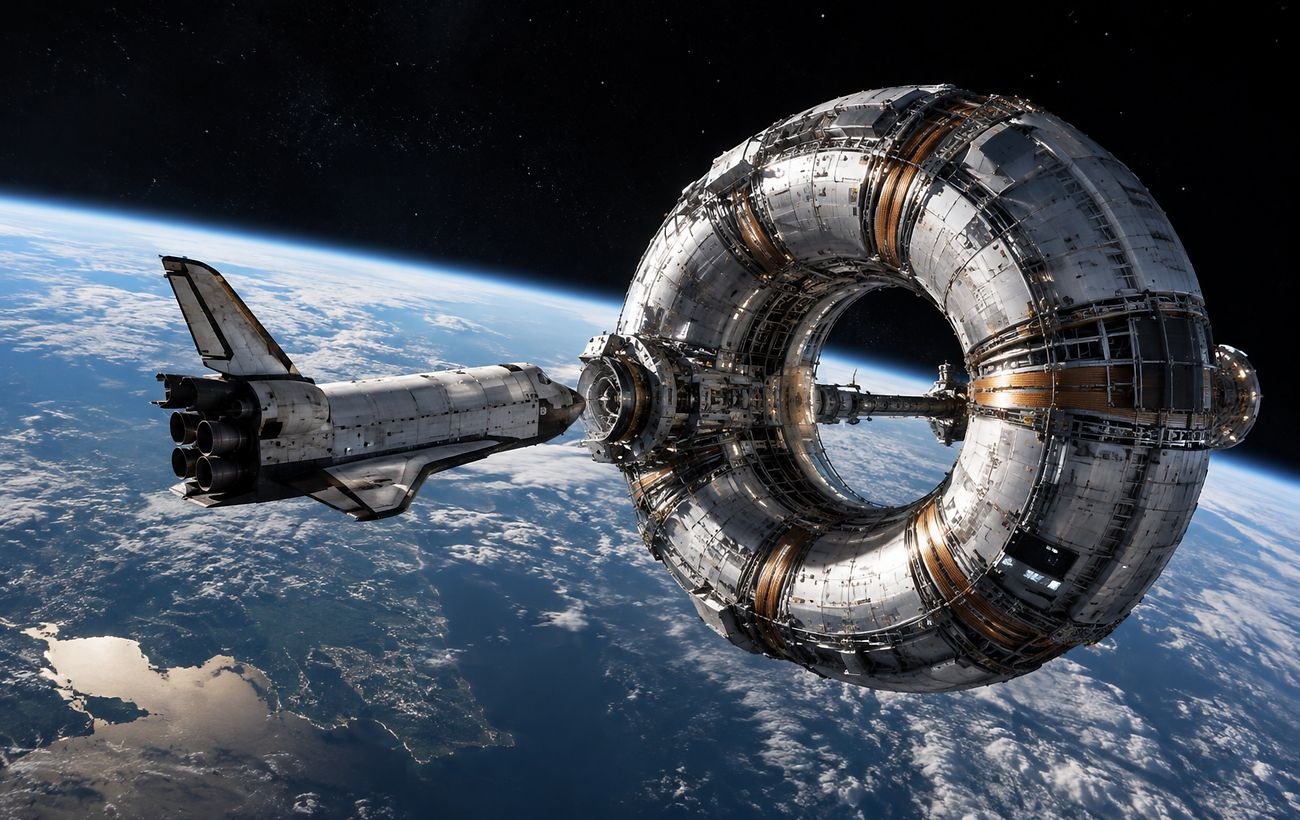
The scientific community is exploring new avenues for clean energy, with recent studies pointing to space as an ideal location for nuclear fusion reactors. According to research published in ResearchGate, scientists are considering deploying tokamaks—donut-shaped reactors—into geostationary orbit.
Physicist Yang Bae of the Spacefaring Research Institute notes that the space environment offers several advantages over terrestrial conditions. Specifically, microgravity reduces mechanical stress on structures, while the vacuum of space allows for more efficient heat dissipation. The absence of atmospheric pressure also enables the design of lighter and more compact vacuum chambers.
Prospects and Challenges
While these concepts remain theoretical, calculations suggest the feasibility of a 1-gigawatt reactor. Such an installation could theoretically power a million homes or support industrial facilities in orbit. Beyond tokamaks, researchers are also investigating the use of high-powered lasers to trigger fusion reactions in space.
Currently, spacecraft rely on solar panels, which lose efficiency as missions move further from the Sun. While the US and China are developing fission reactors for lunar bases, nuclear fusion is viewed as a safer and more sustainable alternative for long-term human presence beyond Earth.
Source RBC-Ukraine — rbc.ua/ukr/news/termoyaderni-reaktori-hochut-vidpraviti-kosmos-1795… ↗
Read next
 🚌Transport
Electricity Restored in Rivne Region After Russian Attack
Electricity has been restored in the Sarny district of the Rivne region after a Russian attack. More than 50 settlements were left without electricity.
 🩺Health
Autumn Rose Care: Expert Pruning Advice for Slavuta Gardeners
Experts advise against radical rose pruning until consistent frost sets in to prevent damage to the plants.
 🇺🇦Ukraine
Estonia issues statement following incident involving Russian vessel in Gulf of Finland
The Estonian government has reaffirmed Ukraine’s right to self-defense while confirming it provided assistance to Finland during the incident.
 🛡️Security
89-year-old woman rescued from rubble of destroyed house in Dymer
Rescue teams are clearing the rubble of a residential building in Dymer hit by an enemy drone. The death toll from the attack has risen to nine.
 🛡️Security
Russian corvette 'Mercury' reportedly hit by Ukrainian drones in Libya
According to the Associated Press, an incident occurred at the port of Benghazi involving a Russian military vessel that may have been targeted by maritime drones.
 🛡️Security
Russia tests NATO defense algorithms through airspace violations, says Dmitry Kashchenko
Military expert Dmitry Kashchenko stated that Russia uses drone and missile incidents in Poland to test the Alliance's readiness.